Rosetta Stone
1:1 Mobile Tutoring: For the Learner Who Means Business
Probelm
Rosetta Stone was recognizable in language learning, just not where it mattered most.
Overview
A two-sided 1:1 mobile tutoring solution for career-minded English learners in South Korea.
Partnering teams
- Product Owner
- Project Manager
- Developer
- Strategist
Timelines
- 6 months
- Launched in 2018
Summary
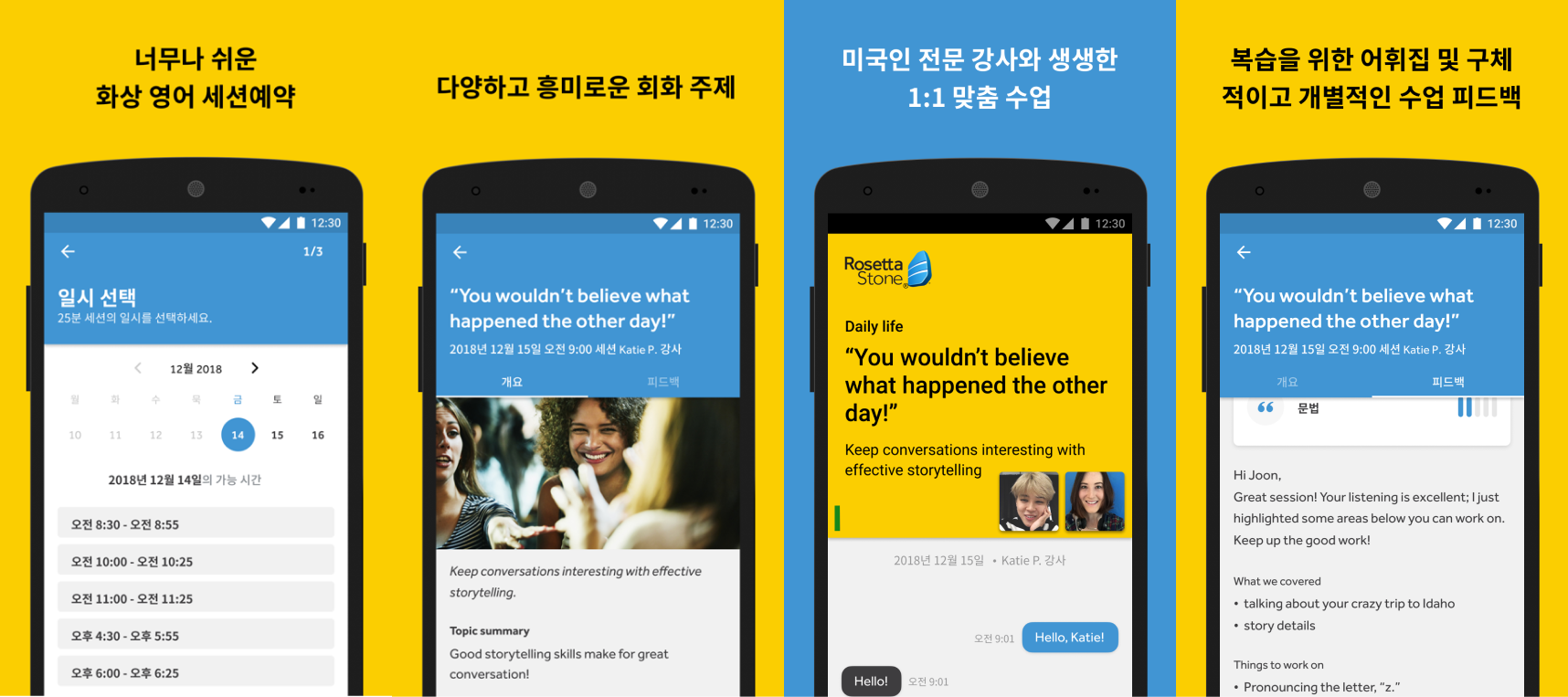
As part of a cross-functional tiger team, I validated, shaped, and designed a two-sided 1:1 mobile tutoring marketplace for career-minded English learners in South Korea. Launched in November 2018.
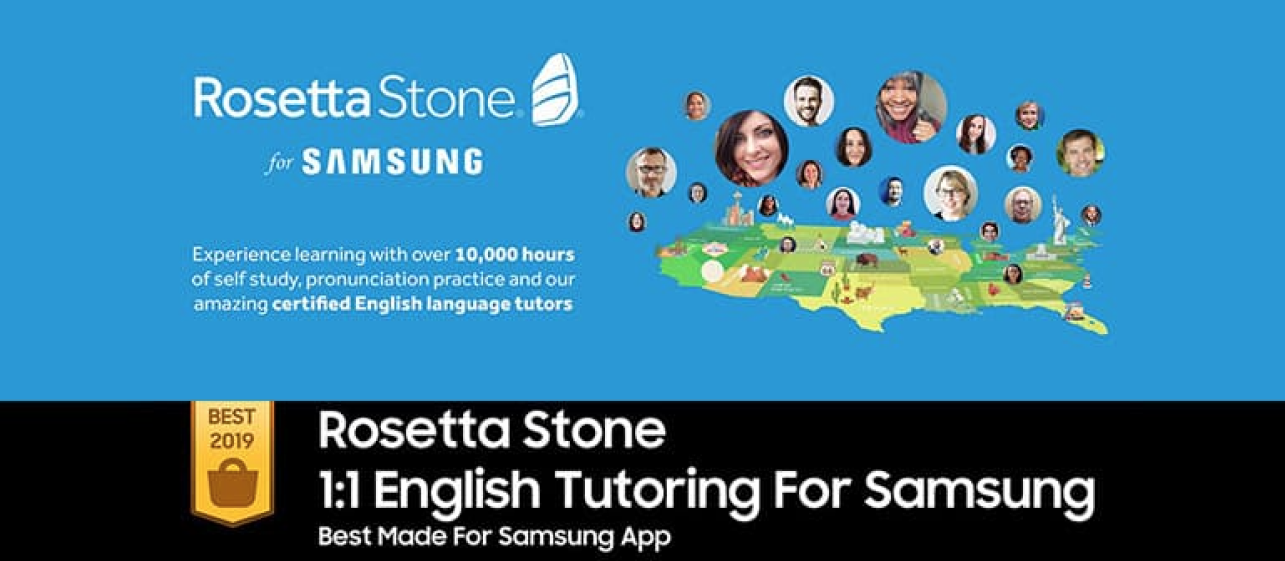
Winner of the 2019 Best Made for Samsung App Award.
Taking advantage of a $1.5 billion opportunity
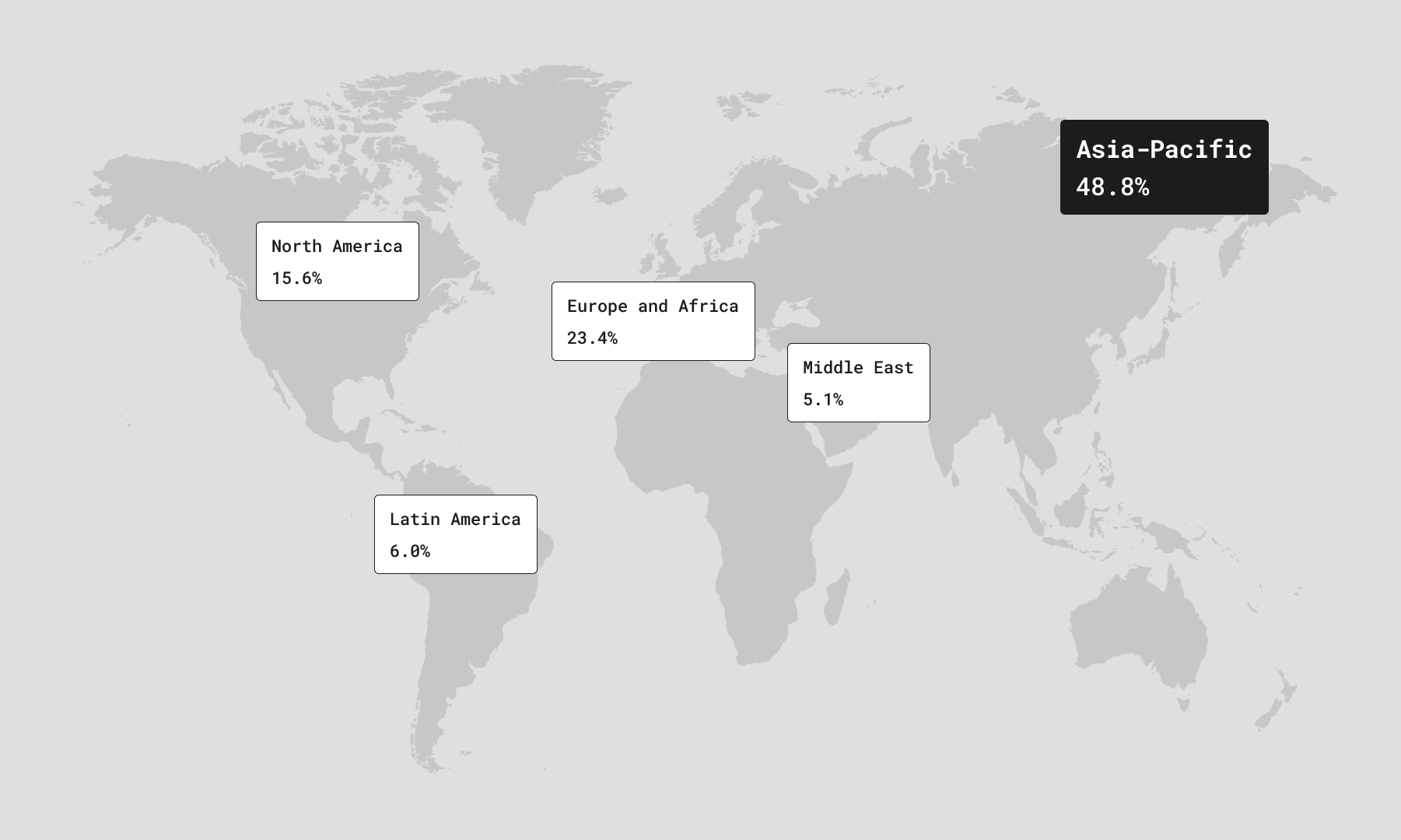
Asia-Pacific is the fastest growing market for English language learning in the world. It was also where Rosetta Stone had the least presence.
I joined a cross-functional tiger team with a clear mandate: validate whether 1:1 mobile tutoring was the right path forward, and if so, shape what that product should be — for learners and tutors alike.
This was a two-sided marketplace problem. And we had six months to solve it.
The Opportunity
There are 1.5 billion English learners globally, and English is growing faster than every other language combined.
Weak product market fit
Serious, career-minded learners make up almost twice the market share of casual hobbyist learners, but Rosetta Stone's existing product wasn't built for them.
Low brand recognition
Rosetta Stone had little presence in APAC, the fastest growing market for English language learning in the world.

Goal
Validate and ship an MVP that addressed Rosetta Stone's biggest market gap, built on existing assets, and designed for both sides of the experience.
Discovery
Understanding the opportunity meant going directly to the people it was built for.
I came to this project with some useful context. Having lived and worked in South Korea as an English tutor, I had firsthand familiarity with the culture and learning environment. That background helped me ask sharper questions. But I let the research lead.
Learner interviews
I conducted seven in-depth interviews with learners across APAC, all remote. The 17-hour time zone difference between PST and Korea required some flexibility on my end, but it was worth it to get the right people in the room.
Key Learnings
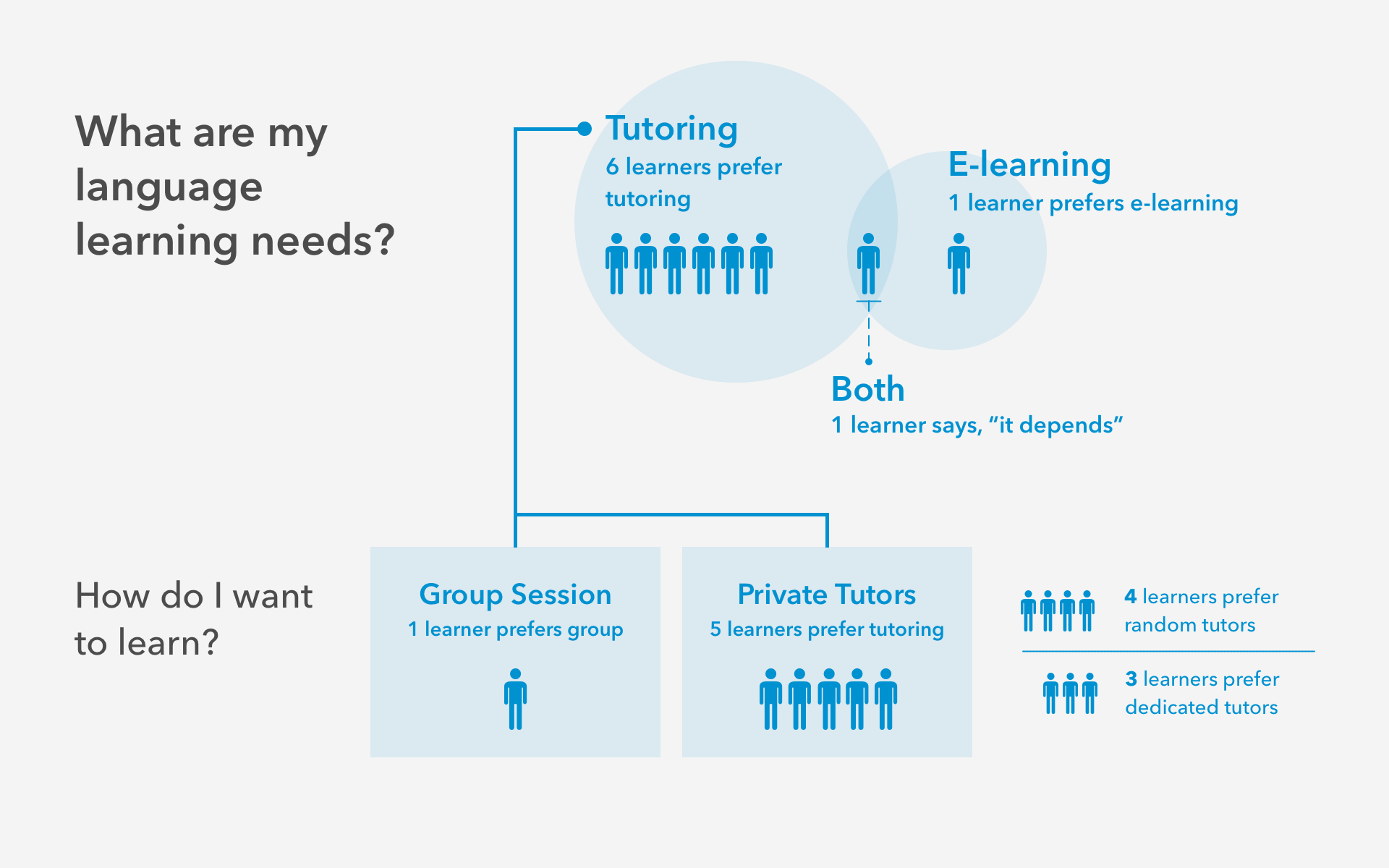
- Learners consistently preferred tutoring over e-learning.
- Leaners prefer private sessions over group ones. More time to speak, more focused feedback.

Competitive analysis
Most tutoring apps were unstructured, tutors were often uncertified, and ratings measured friendliness rather than teaching quality. Career-minded learners paying a premium expect structure, preparation, and a clear sense of what comes next.
Partner interviews
Partners from China and Korea said learners struggle most with speaking and pronunciation.
While students are taught English from K-12 they have little opportunity to practice speaking because native English-speaking tutors are unaffordable.
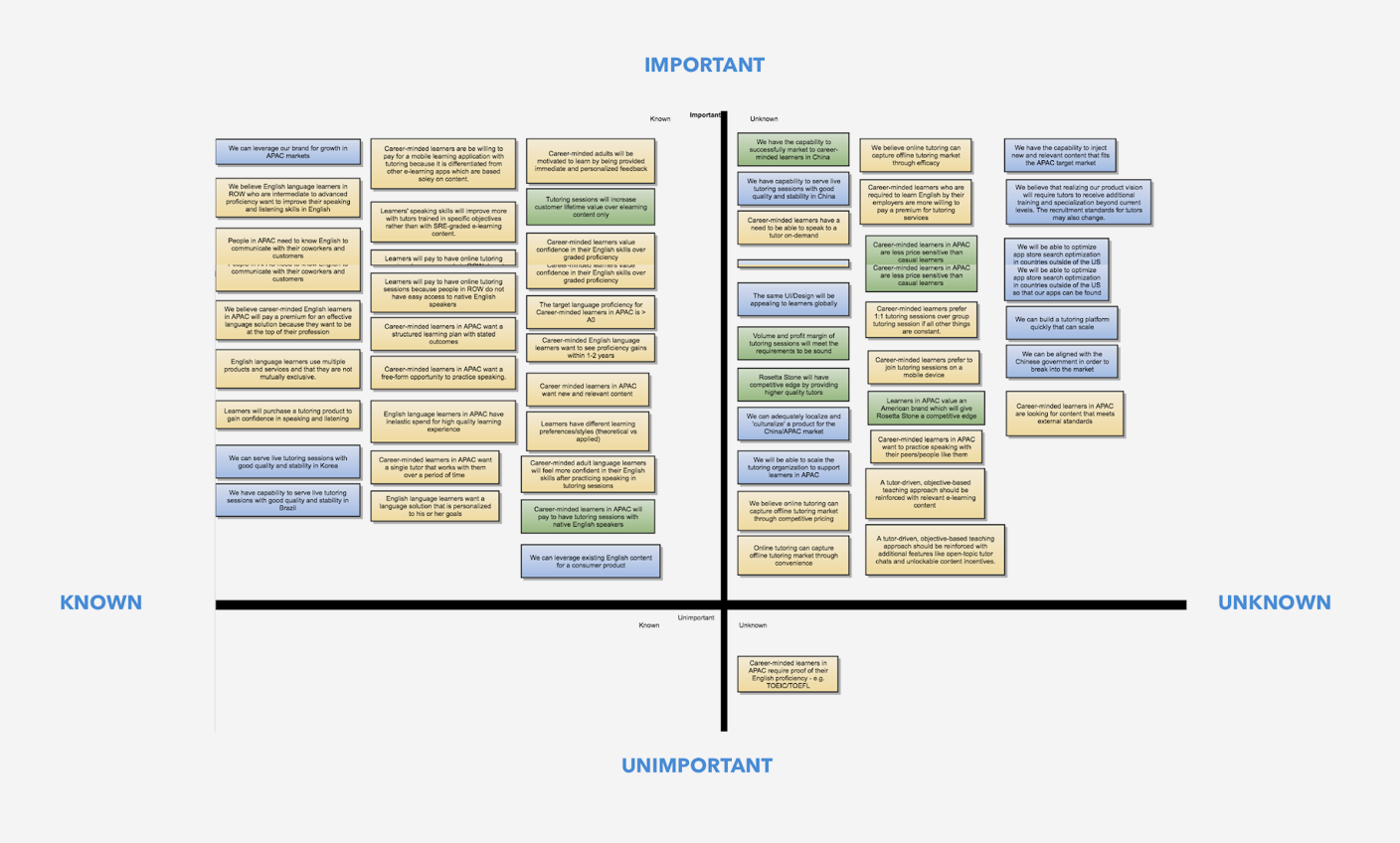
Assumption mapping
Desirability
Career-minded learners cared more about building confidence than hitting a proficiency score.
Feasibility
We could build a tutoring org capable of supporting learners across APAC
Viability
Learners would pay for access to native English-speaking tutors.
These were bets we needed to test.
Proficiency over confidence
Based on my research, I developed a persona to keep the team grounded in who we were designing for.

Persona
Soojung Park
- 34 years old
- Career-minded
- Hyundai Motor Company
- Marketing Manager

Confidence
While Soojung is a high achiever with strong English proficiency, she rarely feels confident when speaking. This mental block makes progress into a daunting challenge.
Needs
She can't pick up and move to an English-speaking country for immersive practice. She needs access to native speakers and specific, structured feedback.
Vulnerability
The shame of public failure came up repeatedly in interviews. Learners were afraid of being wrong and having an audience to witness it.
One learner said it best:
"If you know English, you can go anywhere.”
For Soojung, this isn't about a language skill; it's about what that skill unlocks professionally, socially, and for her family.
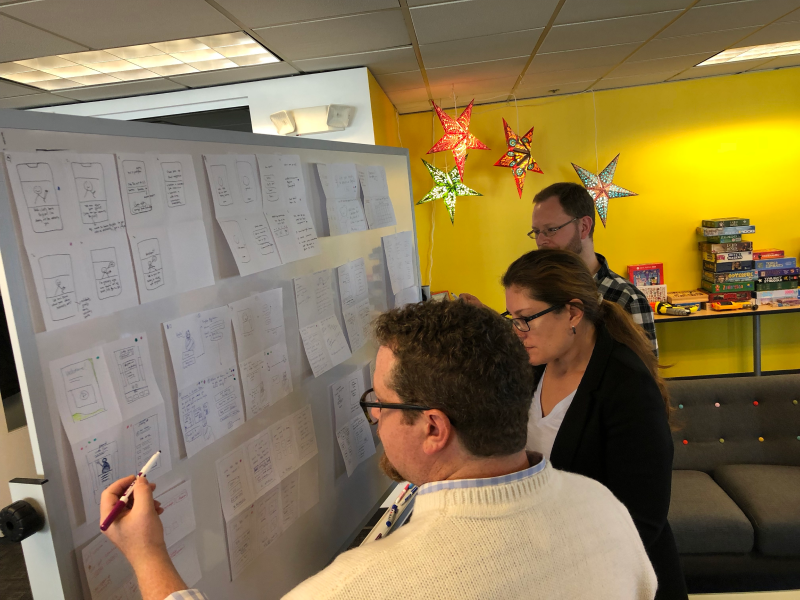
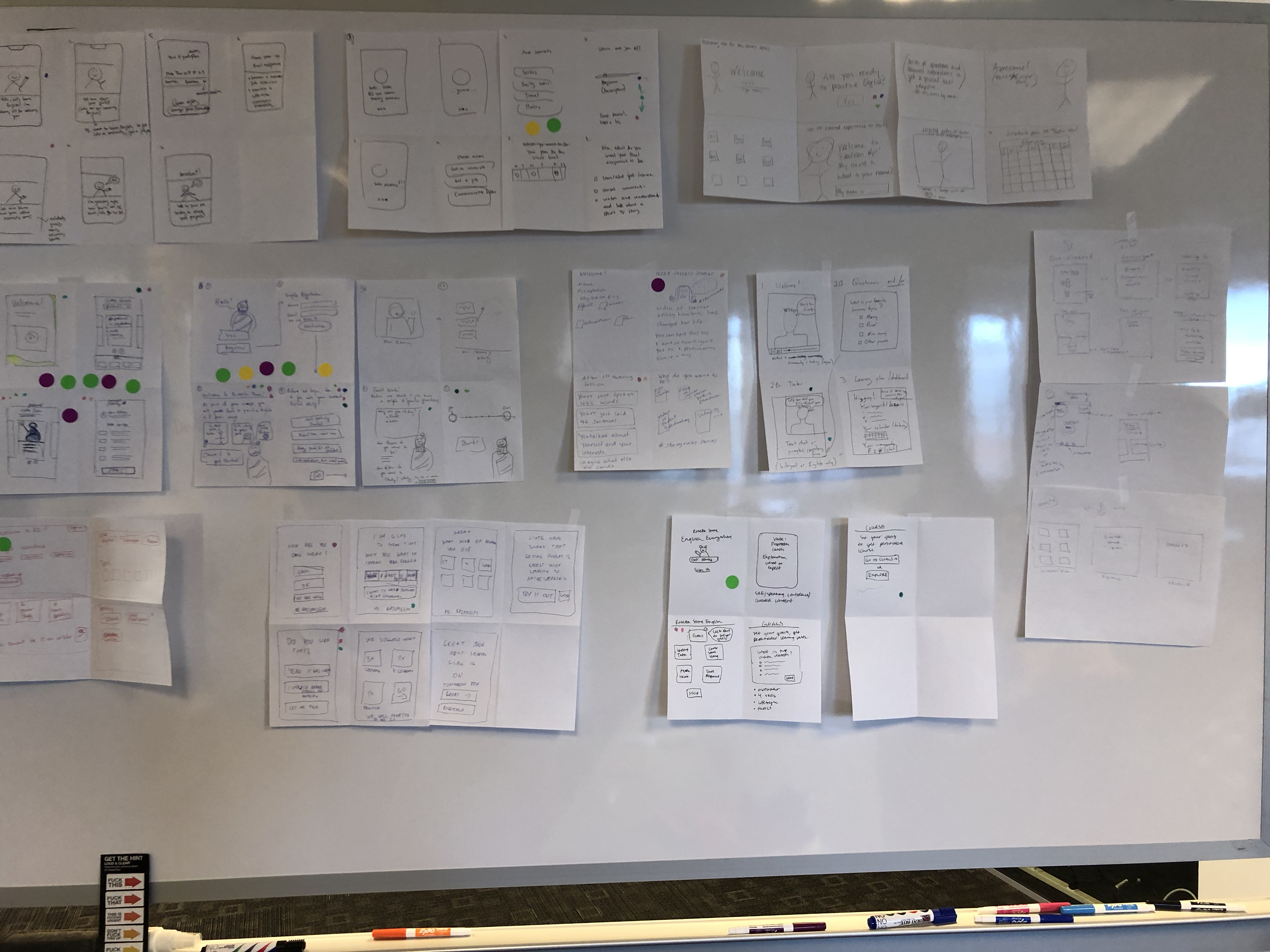
Working within a four-day design sprint
Our team explored two concepts to test with learners. I built working prototypes quickly so we could put real ideas in front of real people the following day.

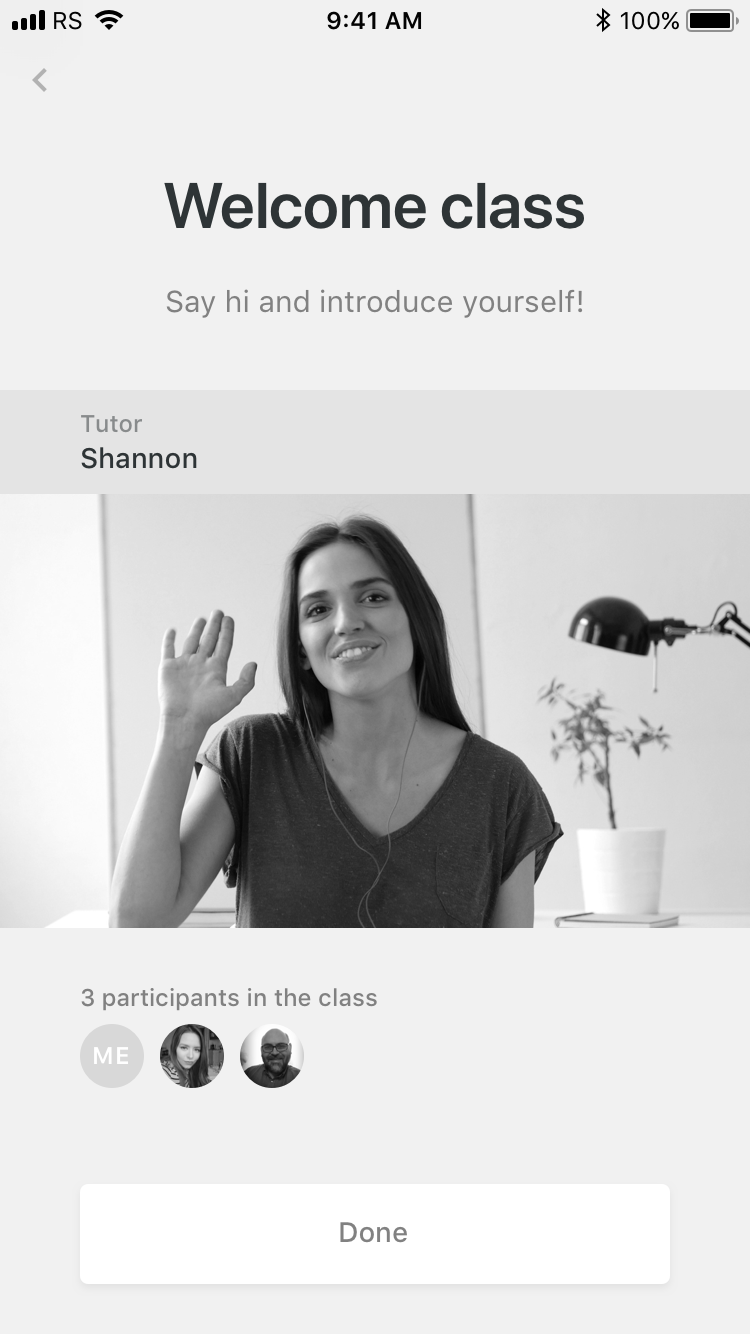
Master Class
Learners could choose from a library of topics taught by well-known business leaders, with live group tutoring to follow. Think MasterClass, but for English language learning.
The results was pretty straightforward. Learners didn't care about the celebrity. They cared about the topic. And the group format triggered the same hesitation we'd already heard in interviews. The shame of getting something wrong in front of others doesn't disappear just because the content is interesting.
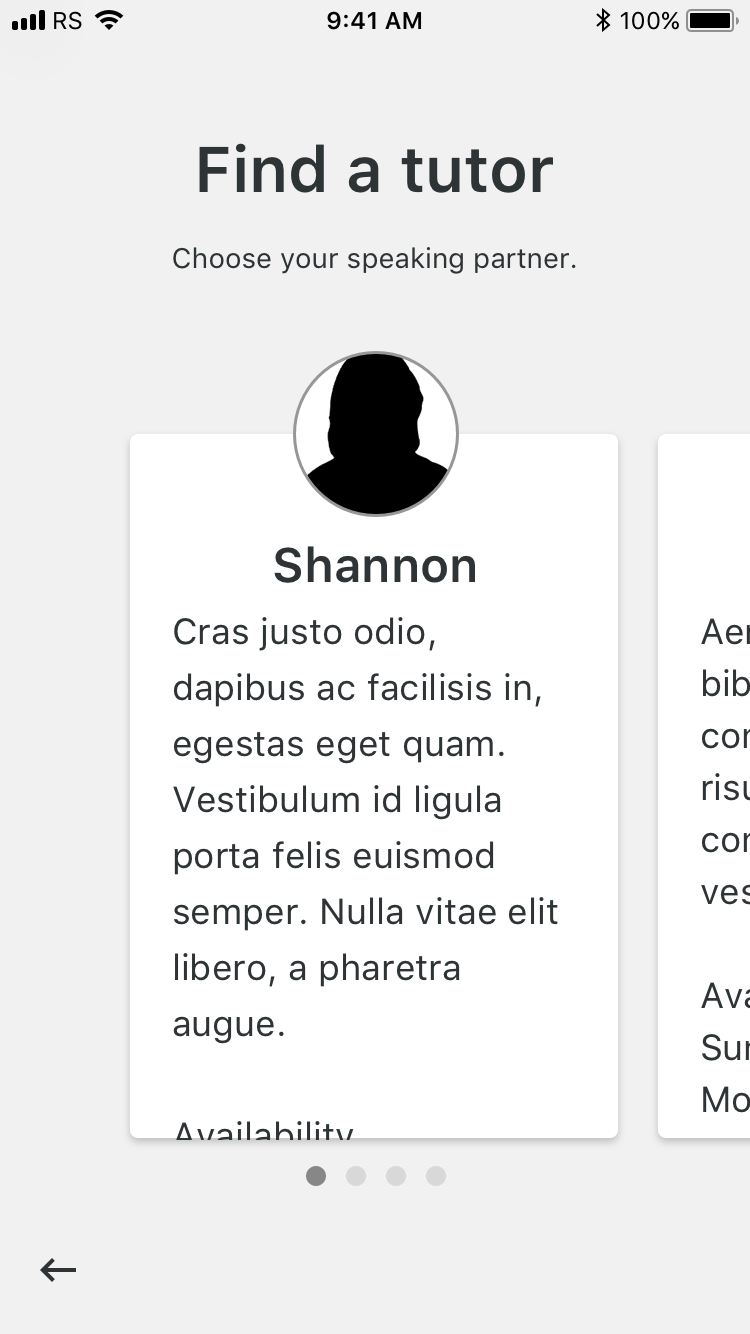
Find a tutor
The second concept focused on private 1:1 tutoring, validating something learners had asked for repeatedly in interviews.
The signal here was strong and consistent. Learners wanted dedicated time with a tutor, focused on real-world business topics, with feedback that was specific and honest.
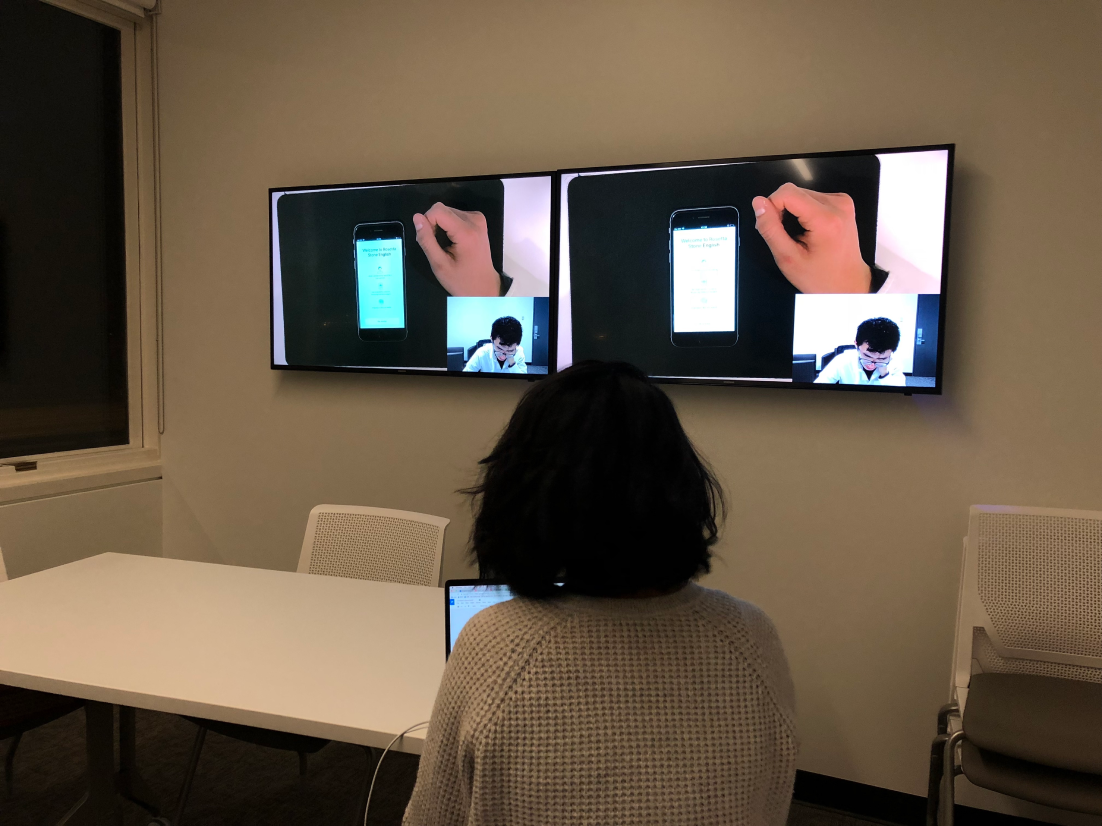
Validation, Key takeaways
The two concepts gave us what we needed, and defined the product brief. Learners were consistent:
- One-on-one sessions, real-world topics, honest feedback, mobile access, career advancement as the north star.
- Access to highly trained native English-speaking tutors was the gap. And nobody in the market was filling it well.
Turning insights into ideas
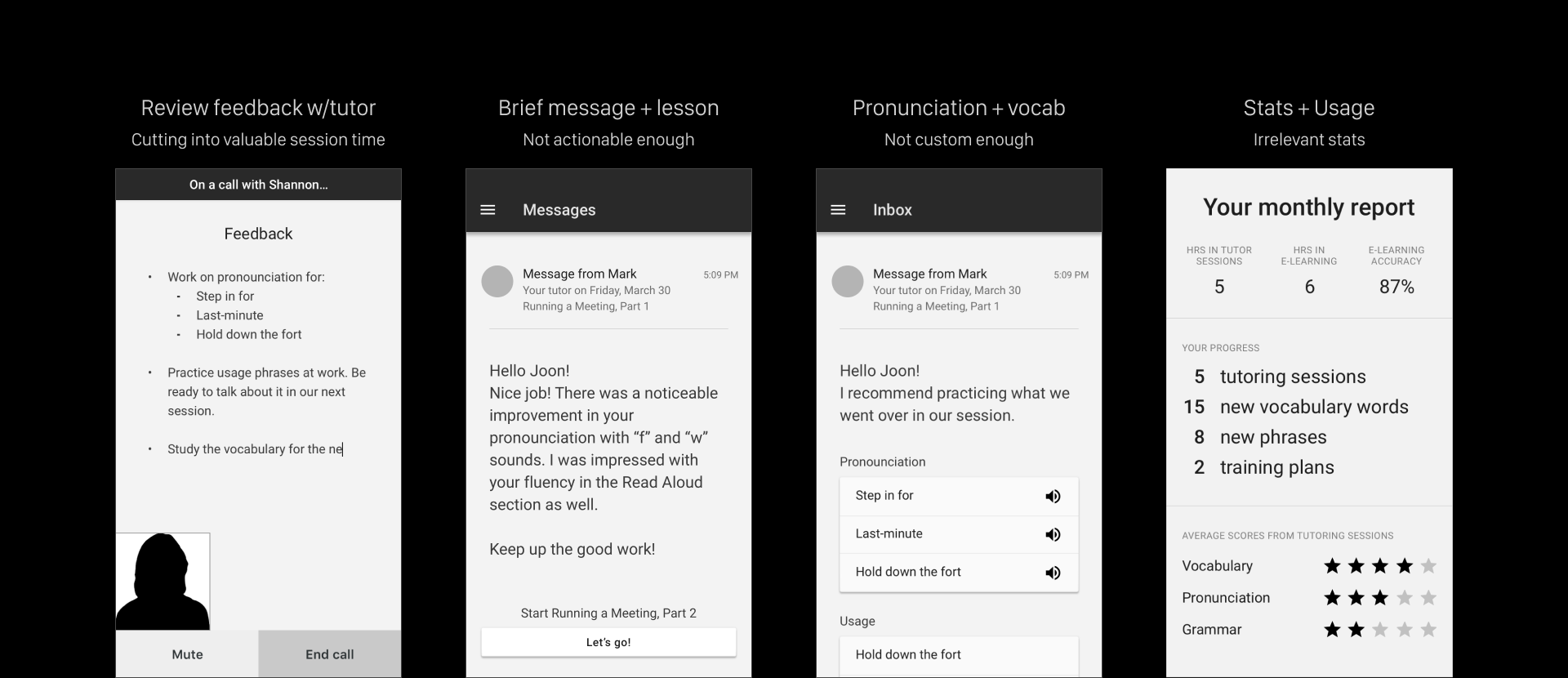
I created low-fidelity mockups and interviewed 17 learners to uncover their tutoring expectations and needs.
Tutoring
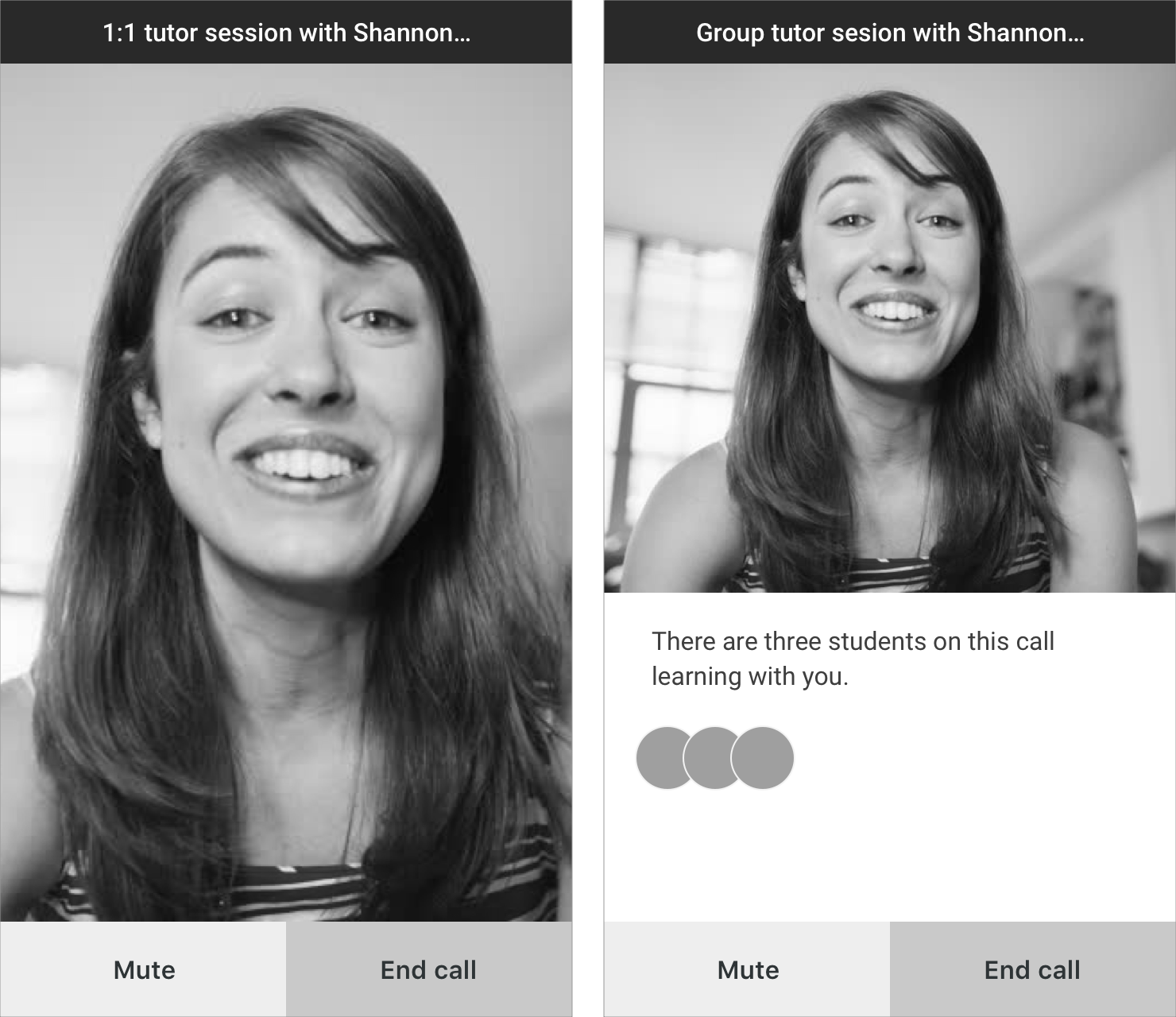
How do learners prefer to learn?
Learners acknowledged the value of group sessions but kept coming back to the same thing: private tutoring meant more time to speak. More time to speak meant faster progress.
“
I prefer the 1:1 situation because I have more opportunity to talk… you have more opportunity to listen to other persons, but less opportunity to speak.”
Measuring progress
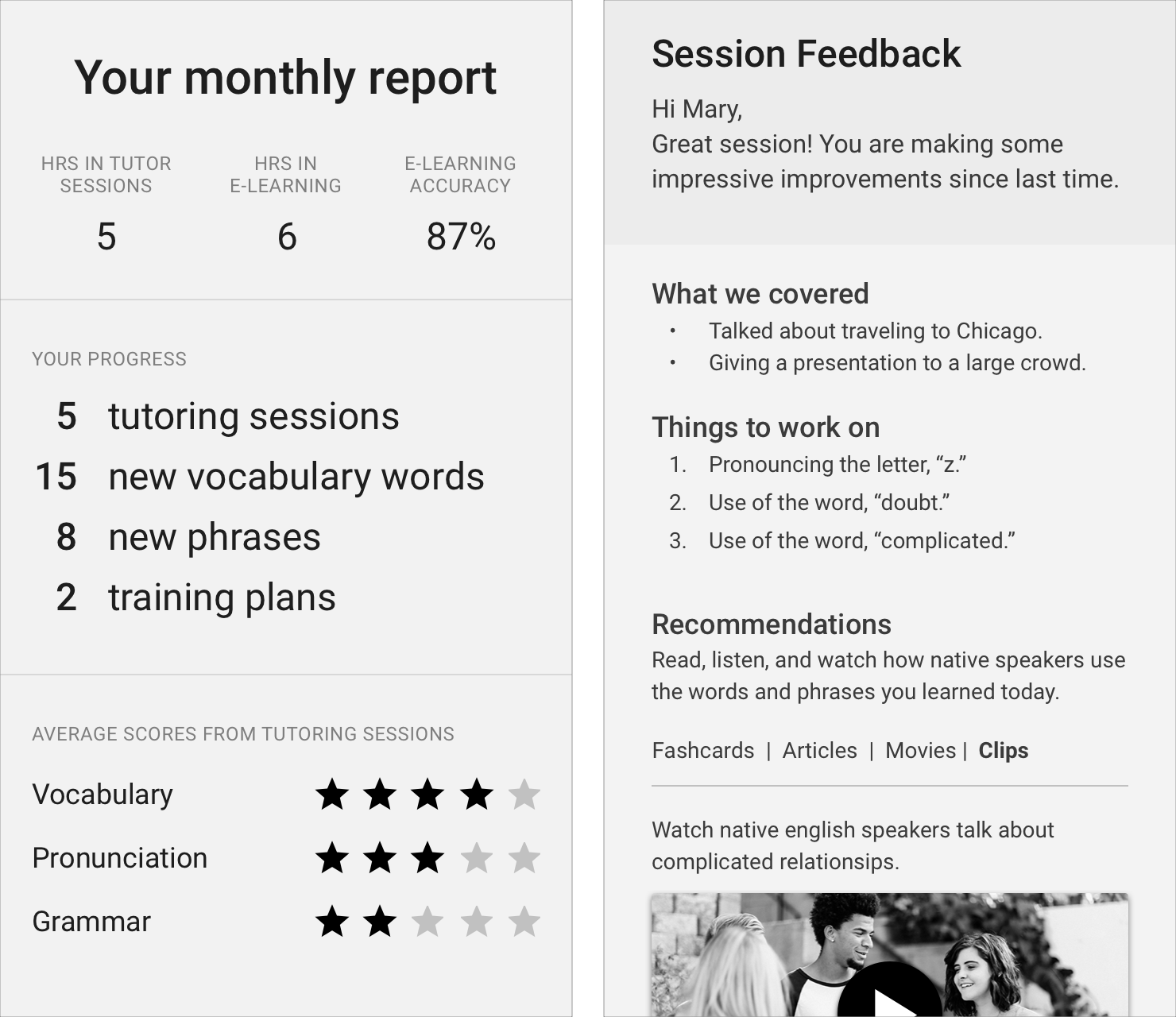
What kind of feedback do learners want?
Learners didn't just want encouragement. They wanted real, specific feedback that reflected measurable progress on pronunciation, grammar, and more. Constructive, honest, and actionable. They were paying for progress, not praise.
“
Encouragement is good, but what’s more important is that we need to learn something.”
Scheduling
What are learners’ mental models?
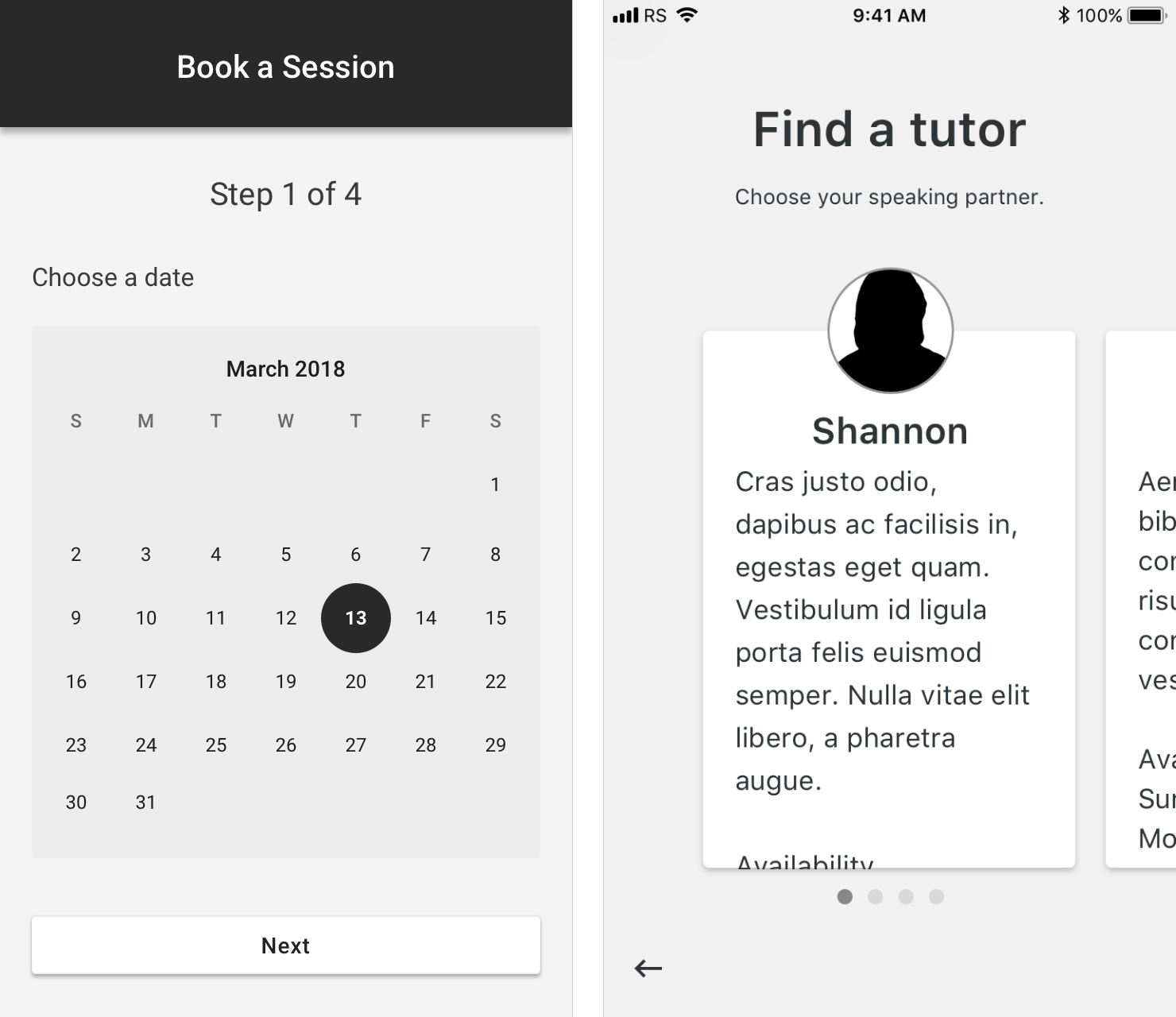
The most surprising insight came here. Learners prioritized finding a time to meet over choosing a specific tutor. As long as tutors met the same standard and were native English speakers, the who mattered less than the when.
Key insight
The cultural context made this click. South Korea consistently ranks second in longest working hours in the world. In 2018, the country amended its Labor Standards Act, reducing the maximum allowable work week from 68 to 52 hours. For learners navigating that reality, scheduling wasn't a secondary concern. It was the primary one.
That insight changed the design. Scheduling came first. Tutor selection came after.
Mapping the journey
My PM and I worked closely throughout: collaborating on interview questions, usability test content, and dividing work where it made sense so we could move quickly without losing quality.
Together we stayed close to engineers, the tutoring org, and every part of the experience that needed to work: the tutor portal, feedback loops, error states, and more. For a small team, our reach was significant.
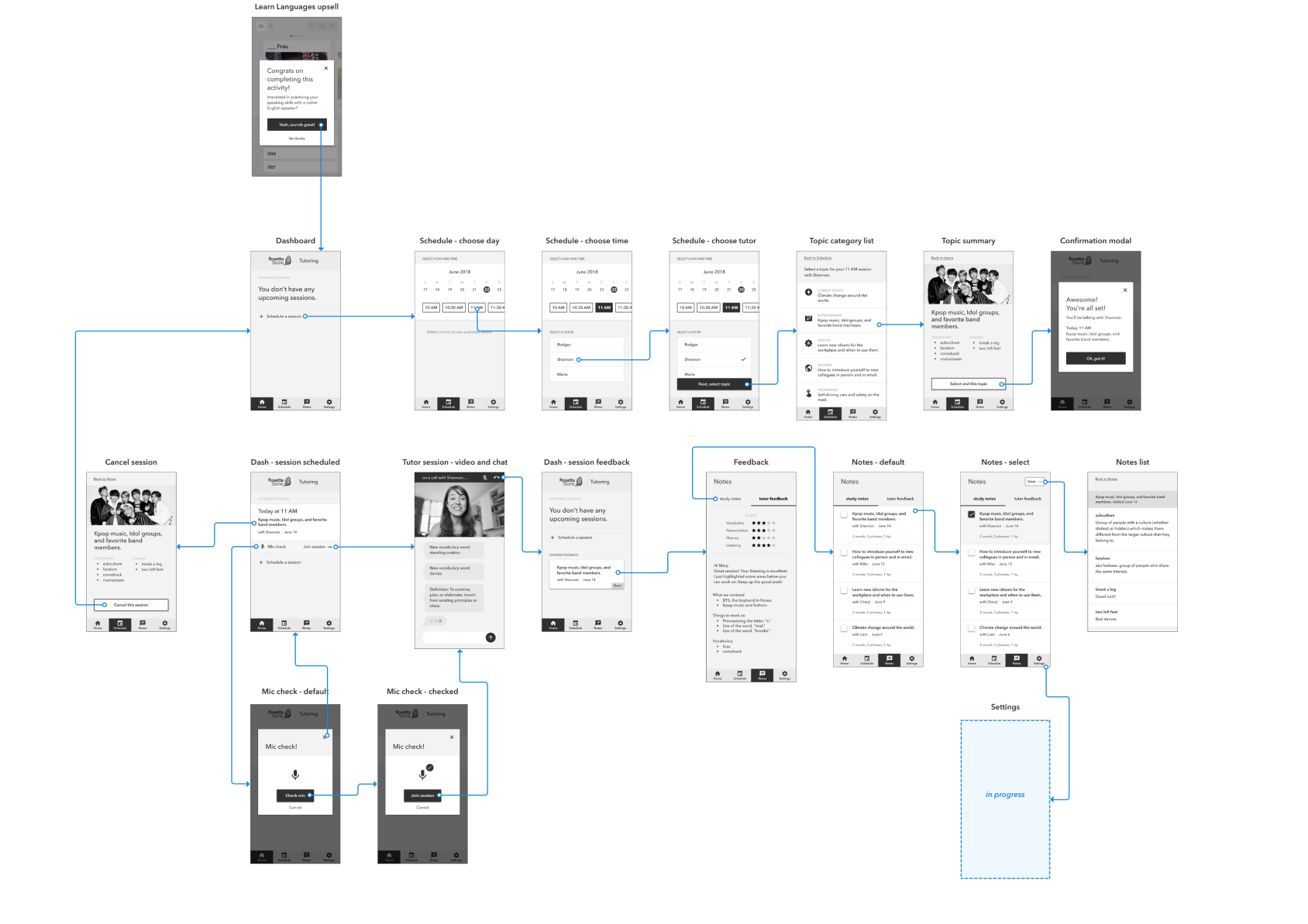
I created a user flow as a shared reference point that kept the entire team aligned on the full scope of the experience, from first session booking to post-session feedback.
Attention to detail

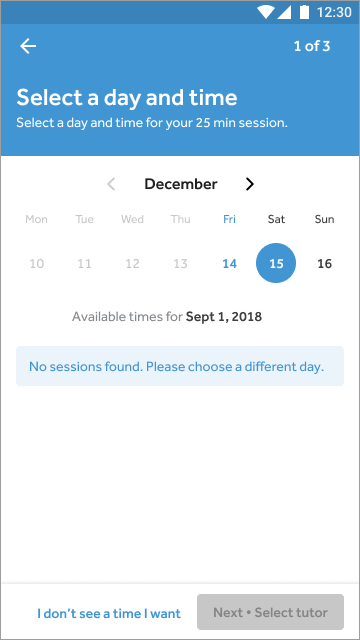
Edge Case #1: No sessions found
Rather than ending the experience at a dead end, we followed up with a screen prompting learners to enter their preferred booking time. That data fed directly back into decisions about tutor availability in Korea.
A dead end became a feedback loop.
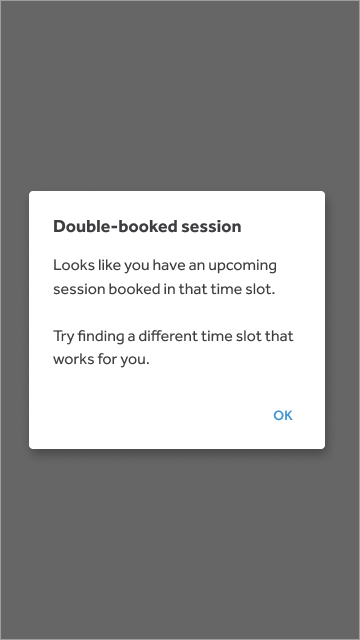
Edge Case #2: Double-booked session
Designed to catch scheduling conflicts before they became learner frustrations.
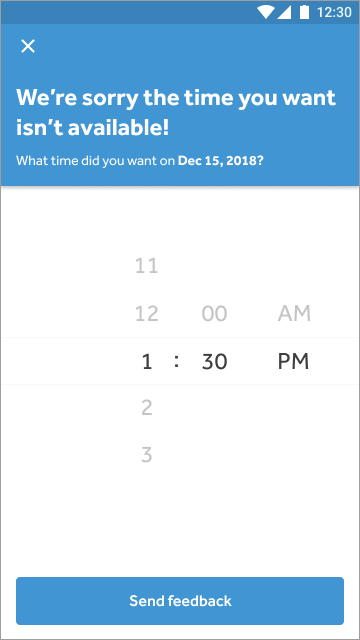
Edge Case #3: Time unavailable
A graceful fallback that kept learners in the flow rather than dropping them out of it.
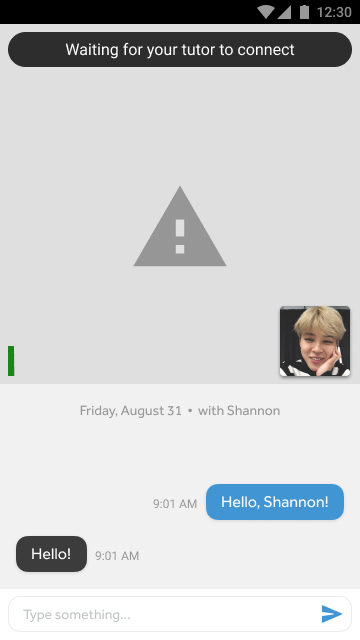
Edge Case #4: Waiting for tutor
Managing the anxiety of the in-between moment, especially for learners who had carved out rare time in a 52-hour work week.
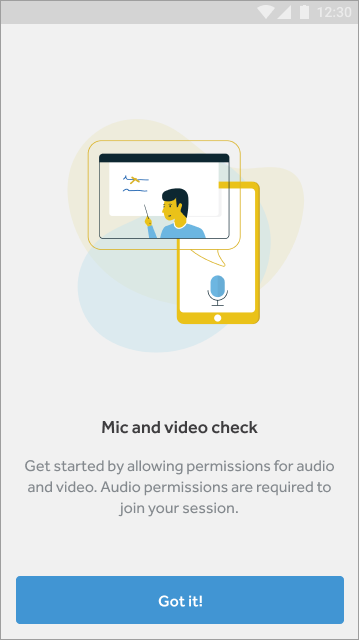
Tech check: Mic + Video
Mic and video verification before every session, so technical issues didn't eat into learning time.
Feedback
Tech + learning
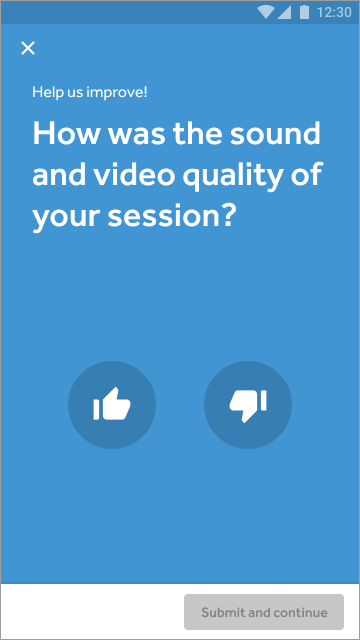
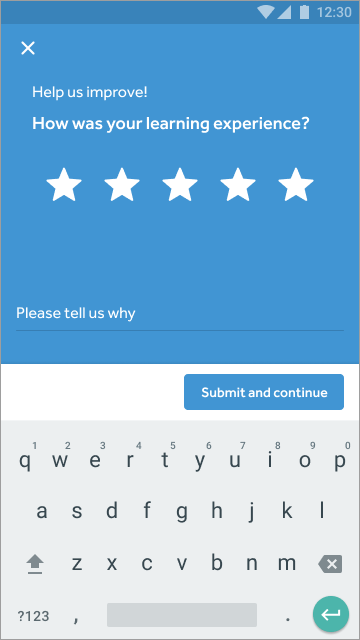
Two separate feedback prompts: one for the technical experience, one for the learning experience. Keeping them separate ensured the quality of the session wasn't conflated with the quality of the connection.
Tutor support
Designing for learners and designing for tutors are two completely different problems.
Learners need clarity, confidence, and a space to make mistakes.
Tutors need to manage all of that while:
- Simultaneously teaching
- Maintaining eye contact with the camera
- Navigating slides
- Managing chat
- Adding vocabulary
- Rating learner performance across multiple competencies. At the same time.
One tutor said it plainly: "We only have 5 minutes between sessions, so it's stressful."
Five minutes to leave feedback, wrap up notes, and prepare for the next learner. That constraint shaped every design decision in the tutor portal.
Making Feedback Faster
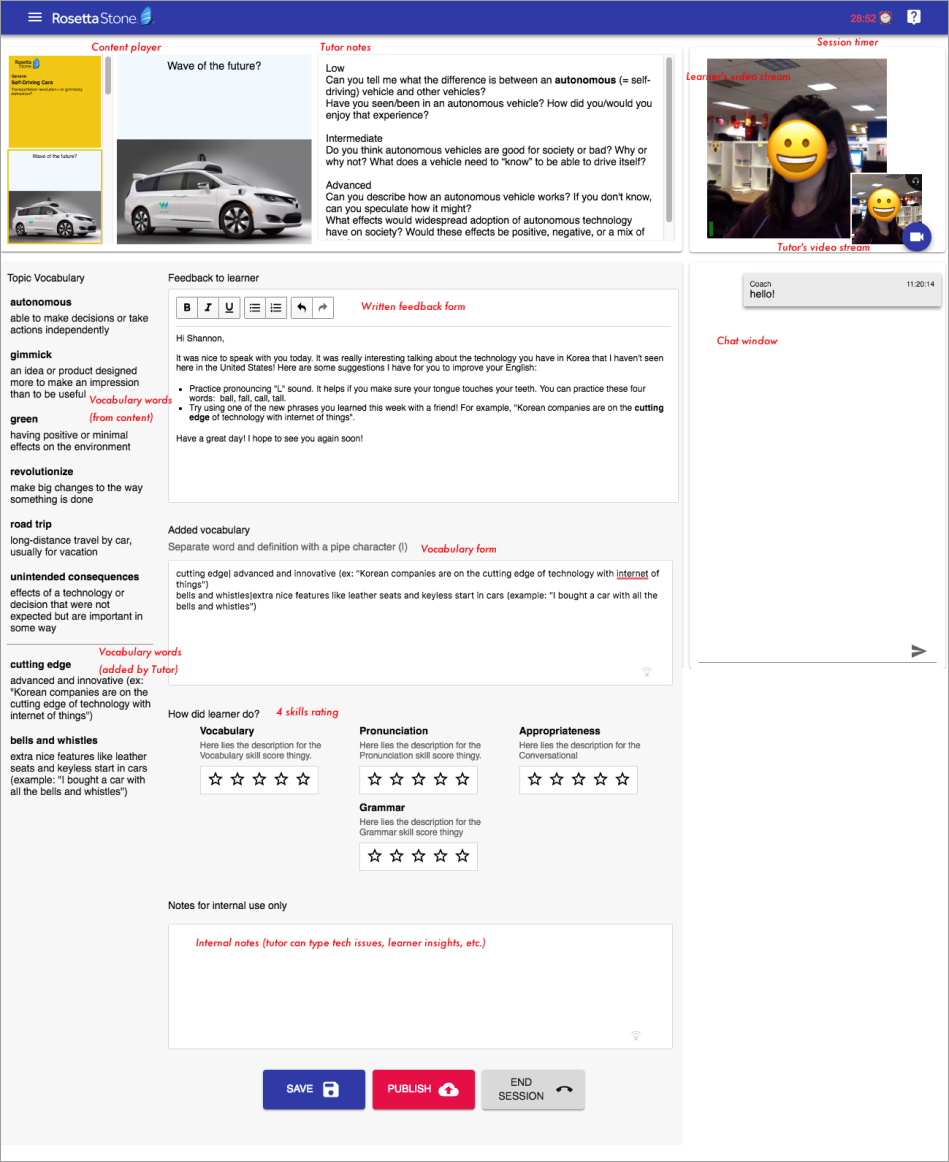
Leaving detailed feedback in five minutes isn't realistic without the right tools. I designed a keyboard shortcut system for the vocabulary section.
Tutors could type a word, hit the "|" character, type the definition, and the output would automatically format with the vocabulary term in bold and the definition in regular weight.
Continuity Across Sessions
Learners don't always book with the same tutor.
Without a way to pass context between sessions, every new tutor pairing started with five minutes of introductions. We solved this with an internal notes section, visible only to tutors, where session details could be documented and shared.
A new tutor could pick up exactly where the last one left off.
Getting this right meant working closely with the tutoring org to understand their workflow, and with engineers to deliver a prototype we could actually test. The tutor experience wasn't an afterthought. It was a the other critical half of the product.
1:1 Mobile tutoring – anytime, anywhere
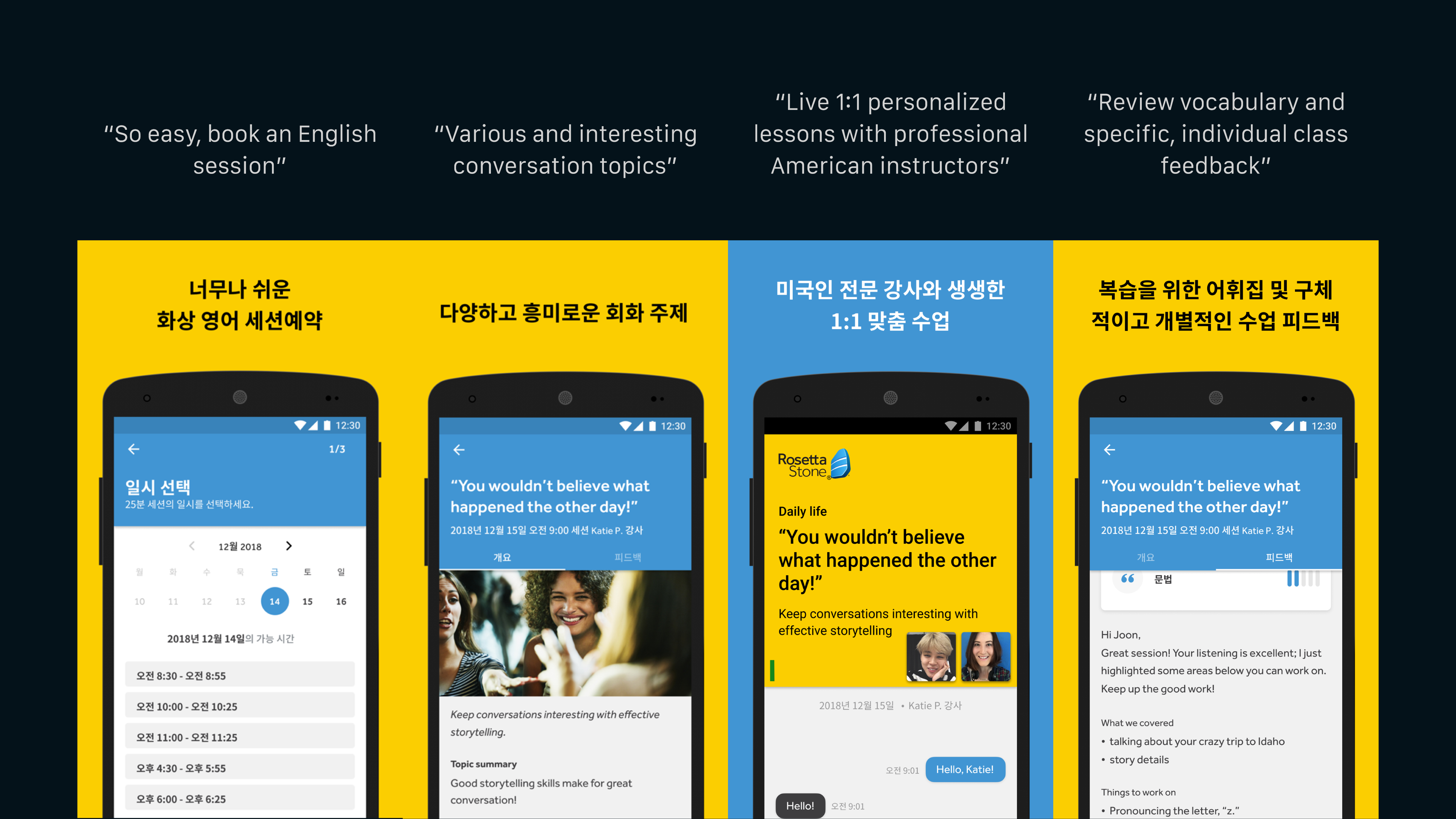
In November 2018, we launched Rosetta Stone's tutoring service in the Google Play Store in South Korea. Six months of research, sprint work, and cross-functional collaboration shipped as an MVP that worked.
2019 The Best Made for Samsung App Award
Presented at the Samsung Developer Conference, the award recognized the app across five criteria: platform optimization, user experience and quality, innovation and feature set, relevance to Samsung users, and ecosystem integration.
Results
- 73% of sessions were rated 5 stars.
- 42% of learners booked more than one session.
- 55% of sessions were booked for the next day.
What We Set Out to Do
- Create a language learning product that learners love and consistently use.
- Gain visibility in APAC where Rosetta Stone was least present.
Work
The Onboarding Hub: One Portal, Every School
Bulk Shift Cancellations. Finally.
1:1 Mobile Tutoring: For the Learner Who Means Business
© 2026 Christine Komatsu

Have a nice day :)
Rosetta Stone
1:1 Mobile Tutoring: For the Learner Who Means Business
Probelm
Rosetta Stone was recognizable in language learning, just not where it mattered most.
Overview
A two-sided 1:1 mobile tutoring solution for career-minded English learners in South Korea.
Partnering teams
- Product Owner
- Project Manager
- Developer
- Strategist
Timelines
- 6 months
- Launched in 2018
Summary
As part of a cross-functional tiger team, I validated, shaped, and designed a two-sided 1:1 mobile tutoring marketplace for career-minded English learners in South Korea. Launched in November 2018.
Winner of the 2019 Best Made for Samsung App Award.
Taking advantage of a $1.5 billion opportunity
Asia-Pacific is the fastest growing market for English language learning in the world. It was also where Rosetta Stone had the least presence.
I joined a cross-functional tiger team with a clear mandate: validate whether 1:1 mobile tutoring was the right path forward, and if so, shape what that product should be — for learners and tutors alike.
This was a two-sided marketplace problem. And we had six months to solve it.
The Opportunity
There are 1.5 billion English learners globally, and English is growing faster than every other language combined.
Weak product market fit
Serious, career-minded learners make up almost twice the market share of casual hobbyist learners, but Rosetta Stone's existing product wasn't built for them.
Low brand recognition
Rosetta Stone had little presence in APAC, the fastest growing market for English language learning in the world.

Goal
Validate and ship an MVP that addressed Rosetta Stone's biggest market gap, built on existing assets, and designed for both sides of the experience.
Discovery
Understanding the opportunity meant going directly to the people it was built for.
I came to this project with some useful context. Having lived and worked in South Korea as an English tutor, I had firsthand familiarity with the culture and learning environment. That background helped me ask sharper questions. But I let the research lead.
Learner interviews
I conducted seven in-depth interviews with learners across APAC, all remote. The 17-hour time zone difference between PST and Korea required some flexibility on my end, but it was worth it to get the right people in the room.
Key Learnings
- Learners consistently preferred tutoring over e-learning.
- Leaners prefer private sessions over group ones. More time to speak, more focused feedback.

Competitive analysis
Most tutoring apps were unstructured, tutors were often uncertified, and ratings measured friendliness rather than teaching quality. Career-minded learners paying a premium expect structure, preparation, and a clear sense of what comes next.
Partner interviews
Partners from China and Korea said learners struggle most with speaking and pronunciation.
While students are taught English from K-12 they have little opportunity to practice speaking because native English-speaking tutors are unaffordable.
Assumption mapping
Desirability
Career-minded learners cared more about building confidence than hitting a proficiency score.
Feasibility
We could build a tutoring org capable of supporting learners across APAC
Viability
Learners would pay for access to native English-speaking tutors.
These were bets we needed to test.
Proficiency over confidence
Based on my research, I developed a persona to keep the team grounded in who we were designing for.

Persona
Soojung Park
- 34 years old
- Career-minded
- Hyundai Motor Company
- Marketing Manager
Confidence
While Soojung is a high achiever with strong English proficiency, she rarely feels confident when speaking. This mental block makes progress into a daunting challenge.
Needs
She can't pick up and move to an English-speaking country for immersive practice. She needs access to native speakers and specific, structured feedback.
Vulnerability
The shame of public failure came up repeatedly in interviews. Learners were afraid of being wrong and having an audience to witness it.
One learner said it best:
"If you know English, you can go anywhere.”
For Soojung, this isn't about a language skill; it's about what that skill unlocks professionally, socially, and for her family.
Working within a four-day design sprint
Our team explored two concepts to test with learners. I built working prototypes quickly so we could put real ideas in front of real people the following day.
Master Class
Learners could choose from a library of topics taught by well-known business leaders, with live group tutoring to follow. Think MasterClass, but for English language learning.
The results was pretty straightforward. Learners didn't care about the celebrity. They cared about the topic. And the group format triggered the same hesitation we'd already heard in interviews. The shame of getting something wrong in front of others doesn't disappear just because the content is interesting.
Find a tutor
The second concept focused on private 1:1 tutoring, validating something learners had asked for repeatedly in interviews.
The signal here was strong and consistent. Learners wanted dedicated time with a tutor, focused on real-world business topics, with feedback that was specific and honest.
Validation, Key takeaways
The two concepts gave us what we needed, and defined the product brief. Learners were consistent:
- One-on-one sessions, real-world topics, honest feedback, mobile access, career advancement as the north star.
- Access to highly trained native English-speaking tutors was the gap. And nobody in the market was filling it well.
Turning insights into ideas
I created low-fidelity mockups and interviewed 17 learners to uncover their tutoring expectations and needs.
Tutoring
How do learners prefer to learn?
Learners acknowledged the value of group sessions but kept coming back to the same thing: private tutoring meant more time to speak. More time to speak meant faster progress.
“
I prefer the 1:1 situation because I have more opportunity to talk… you have more opportunity to listen to other persons, but less opportunity to speak.”
Measuring progress
What kind of feedback do learners want?
Learners didn't just want encouragement. They wanted real, specific feedback that reflected measurable progress on pronunciation, grammar, and more. Constructive, honest, and actionable. They were paying for progress, not praise.
“
Encouragement is good, but what’s more important is that we need to learn something.”
Scheduling
What are learners’ mental models?
The most surprising insight came here. Learners prioritized finding a time to meet over choosing a specific tutor. As long as tutors met the same standard and were native English speakers, the who mattered less than the when.
Key insight
The cultural context made this click. South Korea consistently ranks second in longest working hours in the world. In 2018, the country amended its Labor Standards Act, reducing the maximum allowable work week from 68 to 52 hours. For learners navigating that reality, scheduling wasn't a secondary concern. It was the primary one.
That insight changed the design. Scheduling came first. Tutor selection came after.
Mapping the journey
My PM and I worked closely throughout: collaborating on interview questions, usability test content, and dividing work where it made sense so we could move quickly without losing quality.
Together we stayed close to engineers, the tutoring org, and every part of the experience that needed to work: the tutor portal, feedback loops, error states, and more. For a small team, our reach was significant.
I created a user flow as a shared reference point that kept the entire team aligned on the full scope of the experience, from first session booking to post-session feedback.
Attention to detail

Edge Case #1: No sessions found
Rather than ending the experience at a dead end, we followed up with a screen prompting learners to enter their preferred booking time. That data fed directly back into decisions about tutor availability in Korea.
A dead end became a feedback loop.
Edge Case #2: Double-booked session
Designed to catch scheduling conflicts before they became learner frustrations.
Edge Case #3: Time unavailable
A graceful fallback that kept learners in the flow rather than dropping them out of it.
Edge Case #4: Waiting for tutor
Managing the anxiety of the in-between moment, especially for learners who had carved out rare time in a 52-hour work week.
Tech check: Mic + Video
Mic and video verification before every session, so technical issues didn't eat into learning time.
Feedback
Tech + learning
Two separate feedback prompts: one for the technical experience, one for the learning experience. Keeping them separate ensured the quality of the session wasn't conflated with the quality of the connection.
Tutor support
Designing for learners and designing for tutors are two completely different problems.
Learners need clarity, confidence, and a space to make mistakes.
Tutors need to manage all of that while:
- Simultaneously teaching
- Maintaining eye contact with the camera
- Navigating slides
- Managing chat
- Adding vocabulary
- Rating learner performance across multiple competencies. At the same time.
One tutor said it plainly: "We only have 5 minutes between sessions, so it's stressful."
Five minutes to leave feedback, wrap up notes, and prepare for the next learner. That constraint shaped every design decision in the tutor portal.
Making Feedback Faster
Leaving detailed feedback in five minutes isn't realistic without the right tools. I designed a keyboard shortcut system for the vocabulary section.
Tutors could type a word, hit the "|" character, type the definition, and the output would automatically format with the vocabulary term in bold and the definition in regular weight.
Continuity Across Sessions
Learners don't always book with the same tutor.
Without a way to pass context between sessions, every new tutor pairing started with five minutes of introductions. We solved this with an internal notes section, visible only to tutors, where session details could be documented and shared.
A new tutor could pick up exactly where the last one left off.
Getting this right meant working closely with the tutoring org to understand their workflow, and with engineers to deliver a prototype we could actually test. The tutor experience wasn't an afterthought. It was a the other critical half of the product.
1:1 Mobile tutoring – anytime, anywhere
In November 2018, we launched Rosetta Stone's tutoring service in the Google Play Store in South Korea. Six months of research, sprint work, and cross-functional collaboration shipped as an MVP that worked.
2019 The Best Made for Samsung App Award
Presented at the Samsung Developer Conference, the award recognized the app across five criteria: platform optimization, user experience and quality, innovation and feature set, relevance to Samsung users, and ecosystem integration.
Results
- 73% of sessions were rated 5 stars.
- 42% of learners booked more than one session.
- 55% of sessions were booked for the next day.
What We Set Out to Do
- Create a language learning product that learners love and consistently use.
- Gain visibility in APAC where Rosetta Stone was least present.
Work
The Onboarding Hub: One Portal, Every School
Bulk Shift Cancellations. Finally.
1:1 Mobile Tutoring: For the Learner Who Means Business
© 2026 Christine Komatsu
Have a nice day :)
Rosetta Stone
1:1 Mobile Tutoring: For the Learner Who Means Business
Probelm
Rosetta Stone was recognizable in language learning, just not where it mattered most.
Overview
A two-sided 1:1 mobile tutoring solution for career-minded English learners in South Korea.
Partnering teams
- Product Owner
- Project Manager
- Developer
- Strategist
Timelines
- 6 months
- Launched in 2018
Summary
As part of a cross-functional tiger team, I validated, shaped, and designed a two-sided 1:1 mobile tutoring marketplace for career-minded English learners in South Korea. Launched in November 2018.
Winner of the 2019 Best Made for Samsung App Award.
Taking advantage of a $1.5 billion opportunity
Asia-Pacific is the fastest growing market for English language learning in the world. It was also where Rosetta Stone had the least presence.
I joined a cross-functional tiger team with a clear mandate: validate whether 1:1 mobile tutoring was the right path forward, and if so, shape what that product should be — for learners and tutors alike.
This was a two-sided marketplace problem. And we had six months to solve it.
The Opportunity
There are 1.5 billion English learners globally, and English is growing faster than every other language combined.
Weak product market fit
Serious, career-minded learners make up almost twice the market share of casual hobbyist learners, but Rosetta Stone's existing product wasn't built for them.
Low brand recognition
Rosetta Stone had little presence in APAC, the fastest growing market for English language learning in the world.

Goal
Validate and ship an MVP that addressed Rosetta Stone's biggest market gap, built on existing assets, and designed for both sides of the experience.
Discovery
Understanding the opportunity meant going directly to the people it was built for.
I came to this project with some useful context. Having lived and worked in South Korea as an English tutor, I had firsthand familiarity with the culture and learning environment. That background helped me ask sharper questions. But I let the research lead.
Learner interviews
I conducted seven in-depth interviews with learners across APAC, all remote. The 17-hour time zone difference between PST and Korea required some flexibility on my end, but it was worth it to get the right people in the room.
Key Learnings
- Learners consistently preferred tutoring over e-learning.
- Leaners prefer private sessions over group ones. More time to speak, more focused feedback.

Competitive analysis
Most tutoring apps were unstructured, tutors were often uncertified, and ratings measured friendliness rather than teaching quality. Career-minded learners paying a premium expect structure, preparation, and a clear sense of what comes next.
Partner interviews
Partners from China and Korea said learners struggle most with speaking and pronunciation.
While students are taught English from K-12 they have little opportunity to practice speaking because native English-speaking tutors are unaffordable.
Assumption mapping
Desirability
Career-minded learners cared more about building confidence than hitting a proficiency score.
Feasibility
We could build a tutoring org capable of supporting learners across APAC
Viability
Learners would pay for access to native English-speaking tutors.
These were bets we needed to test.
Proficiency over confidence
Based on my research, I developed a persona to keep the team grounded in who we were designing for.

Persona
Soojung Park
- 34 years old
- Career-minded
- Hyundai Motor Company
- Marketing Manager
Confidence
While Soojung is a high achiever with strong English proficiency, she rarely feels confident when speaking. This mental block makes progress into a daunting challenge.
Needs
She can't pick up and move to an English-speaking country for immersive practice. She needs access to native speakers and specific, structured feedback.
Vulnerability
The shame of public failure came up repeatedly in interviews. Learners were afraid of being wrong and having an audience to witness it.
One learner said it best:
"If you know English, you can go anywhere.”
For Soojung, this isn't about a language skill; it's about what that skill unlocks professionally, socially, and for her family.
Working within a four-day design sprint
Our team explored two concepts to test with learners. I built working prototypes quickly so we could put real ideas in front of real people the following day.
Master Class
Learners could choose from a library of topics taught by well-known business leaders, with live group tutoring to follow. Think MasterClass, but for English language learning.
The results was pretty straightforward. Learners didn't care about the celebrity. They cared about the topic. And the group format triggered the same hesitation we'd already heard in interviews. The shame of getting something wrong in front of others doesn't disappear just because the content is interesting.
Find a tutor
The second concept focused on private 1:1 tutoring, validating something learners had asked for repeatedly in interviews.
The signal here was strong and consistent. Learners wanted dedicated time with a tutor, focused on real-world business topics, with feedback that was specific and honest.
Validation, Key takeaways
The two concepts gave us what we needed, and defined the product brief. Learners were consistent:
- One-on-one sessions, real-world topics, honest feedback, mobile access, career advancement as the north star.
- Access to highly trained native English-speaking tutors was the gap. And nobody in the market was filling it well.
Turning insights into ideas
I created low-fidelity mockups and interviewed 17 learners to uncover their tutoring expectations and needs.
Tutoring
How do learners prefer to learn?
Learners acknowledged the value of group sessions but kept coming back to the same thing: private tutoring meant more time to speak. More time to speak meant faster progress.
“
I prefer the 1:1 situation because I have more opportunity to talk… you have more opportunity to listen to other persons, but less opportunity to speak.”
Measuring progress
What kind of feedback do learners want?
Learners didn't just want encouragement. They wanted real, specific feedback that reflected measurable progress on pronunciation, grammar, and more. Constructive, honest, and actionable. They were paying for progress, not praise.
“
Encouragement is good, but what’s more important is that we need to learn something.”
Scheduling
What are learners’ mental models?
The most surprising insight came here. Learners prioritized finding a time to meet over choosing a specific tutor. As long as tutors met the same standard and were native English speakers, the who mattered less than the when.
Key insight
The cultural context made this click. South Korea consistently ranks second in longest working hours in the world. In 2018, the country amended its Labor Standards Act, reducing the maximum allowable work week from 68 to 52 hours. For learners navigating that reality, scheduling wasn't a secondary concern. It was the primary one.
That insight changed the design. Scheduling came first. Tutor selection came after.
Mapping the journey
My PM and I worked closely throughout: collaborating on interview questions, usability test content, and dividing work where it made sense so we could move quickly without losing quality.
Together we stayed close to engineers, the tutoring org, and every part of the experience that needed to work: the tutor portal, feedback loops, error states, and more. For a small team, our reach was significant.
I created a user flow as a shared reference point that kept the entire team aligned on the full scope of the experience, from first session booking to post-session feedback.
Attention to detail

Edge Case #1: No sessions found
Rather than ending the experience at a dead end, we followed up with a screen prompting learners to enter their preferred booking time. That data fed directly back into decisions about tutor availability in Korea.
A dead end became a feedback loop.
Edge Case #2: Double-booked session
Designed to catch scheduling conflicts before they became learner frustrations.
Edge Case #3: Time unavailable
A graceful fallback that kept learners in the flow rather than dropping them out of it.
Edge Case #4: Waiting for tutor
Managing the anxiety of the in-between moment, especially for learners who had carved out rare time in a 52-hour work week.
Tech check: Mic + Video
Mic and video verification before every session, so technical issues didn't eat into learning time.
Feedback
Tech + learning
Two separate feedback prompts: one for the technical experience, one for the learning experience. Keeping them separate ensured the quality of the session wasn't conflated with the quality of the connection.
Tutor support
Designing for learners and designing for tutors are two completely different problems.
Learners need clarity, confidence, and a space to make mistakes.
Tutors need to manage all of that while:
- Simultaneously teaching
- Maintaining eye contact with the camera
- Navigating slides
- Managing chat
- Adding vocabulary
- Rating learner performance across multiple competencies. At the same time.
One tutor said it plainly: "We only have 5 minutes between sessions, so it's stressful."
Five minutes to leave feedback, wrap up notes, and prepare for the next learner. That constraint shaped every design decision in the tutor portal.
Making Feedback Faster
Leaving detailed feedback in five minutes isn't realistic without the right tools. I designed a keyboard shortcut system for the vocabulary section.
Tutors could type a word, hit the "|" character, type the definition, and the output would automatically format with the vocabulary term in bold and the definition in regular weight.
Continuity Across Sessions
Learners don't always book with the same tutor.
Without a way to pass context between sessions, every new tutor pairing started with five minutes of introductions. We solved this with an internal notes section, visible only to tutors, where session details could be documented and shared.
A new tutor could pick up exactly where the last one left off.
Getting this right meant working closely with the tutoring org to understand their workflow, and with engineers to deliver a prototype we could actually test. The tutor experience wasn't an afterthought. It was a the other critical half of the product.
1:1 Mobile tutoring – anytime, anywhere
In November 2018, we launched Rosetta Stone's tutoring service in the Google Play Store in South Korea. Six months of research, sprint work, and cross-functional collaboration shipped as an MVP that worked.
2019 The Best Made for Samsung App Award
Presented at the Samsung Developer Conference, the award recognized the app across five criteria: platform optimization, user experience and quality, innovation and feature set, relevance to Samsung users, and ecosystem integration.
Results
- 73% of sessions were rated 5 stars.
- 42% of learners booked more than one session.
- 55% of sessions were booked for the next day.
What We Set Out to Do
- Create a language learning product that learners love and consistently use.
- Gain visibility in APAC where Rosetta Stone was least present.
Work
The Onboarding Hub: One Portal, Every School
Bulk Shift Cancellations. Finally.
1:1 Mobile Tutoring: For the Learner Who Means Business
© 2026 Christine Komatsu
Have a nice day :)
Rosetta Stone
1:1 Mobile Tutoring: For the Learner Who Means Business
Probelm
Rosetta Stone was recognizable in language learning, just not where it mattered most.
Overview
A two-sided 1:1 mobile tutoring solution for career-minded English learners in South Korea.
Partnering teams
- Product Owner
- Project Manager
- Developer
- Strategist
Timelines
- 6 months
- Launched in 2018
Summary
As part of a cross-functional tiger team, I validated, shaped, and designed a two-sided 1:1 mobile tutoring marketplace for career-minded English learners in South Korea. Launched in November 2018.
Winner of the 2019 Best Made for Samsung App Award.
Taking advantage of a $1.5 billion opportunity
Asia-Pacific is the fastest growing market for English language learning in the world. It was also where Rosetta Stone had the least presence.
I joined a cross-functional tiger team with a clear mandate: validate whether 1:1 mobile tutoring was the right path forward, and if so, shape what that product should be, for learners and tutors alike.
This was a two-sided marketplace problem. And we had six months to solve it.
The Opportunity
There are 1.5 billion English learners globally, and English is growing faster than every other language combined.
Weak product market fit
Serious, career-minded learners make up almost twice the market share of casual hobbyist learners, but Rosetta Stone's existing product wasn't built for them.
Low brand recognition
Rosetta Stone had little presence in APAC, the fastest growing market for English language learning in the world.

Goal
Validate and ship an MVP that addressed Rosetta Stone's biggest market gap, built on existing assets, and designed for both sides of the experience.
Discovery
I came to this project with some useful context. Having lived and worked in South Korea as an English tutor, I had firsthand familiarity with the culture and learning environment. That background helped me ask sharper questions, but I let the research lead.
Learner interviews
I conducted seven in-depth interviews with learners across APAC, all remote. The 17-hour time zone difference between PST and Korea required some flexibility on my end, but it was worth it to get the right people in the room.
Key Learnings
- Learners consistently preferred tutoring over e-learning.
- Leaners prefer private sessions over group ones. More time to speak, more focused feedback.

Competitive analysis
Most tutoring apps were unstructured, tutors were often uncertified, and ratings measured friendliness rather than teaching quality. Career-minded learners paying a premium expect structure, preparation, and a clear sense of what comes next.
Partner interviews
Partners from China and Korea said learners struggle most with speaking and pronunciation.
While students are taught English from K-12 they have little opportunity to practice speaking because native English-speaking tutors are unaffordable.
Assumption mapping
Desirability
Career-minded learners cared more about building confidence than hitting a proficiency score.
Feasibility
We could build a tutoring org capable of supporting learners across APAC
Viability
Learners would pay for access to native English-speaking tutors.
These were bets we needed to test.
Proficiency over confidence
Based on my research, I developed a persona to keep the team grounded in who we were designing for.

Persona
Soojung Park
- 34 years old
- Career-minded
- Hyundai Motor Company
- Marketing Manager
Confidence
While Soojung is a high achiever with strong English proficiency, she rarely feels confident when speaking. This mental block makes progress into a daunting challenge.
Needs
She can't pick up and move to an English-speaking country for immersive practice. She needs access to native speakers and specific, structured feedback.
Vulnerability
The shame of public failure came up repeatedly in interviews. Learners were afraid of being wrong and having an audience to witness it.
One learner said it best:
"If you know English, you can go anywhere.”
For Soojung, this isn't about a language skill; it's about what that skill unlocks professionally, socially, and for her family.
Working within a four-day design sprint
Our team explored two concepts to test with learners. I built working prototypes quickly so we could put real ideas in front of real people the following day.
Master Class
Learners could choose from a library of topics taught by well-known business leaders, with live group tutoring to follow. Think MasterClass, but for English language learning.
The results was pretty straightforward. Learners didn't care about the celebrity. They cared about the topic. And the group format triggered the same hesitation we'd already heard in interviews. The shame of getting something wrong in front of others doesn't disappear just because the content is interesting.
Find a tutor
The second concept focused on private 1:1 tutoring, validating something learners had asked for repeatedly in interviews.
The signal here was strong and consistent. Learners wanted dedicated time with a tutor, focused on real-world business topics, with feedback that was specific and honest.
Validation, Key takeaways
The two concepts gave us what we needed, and defined the product brief. Learners were consistent:
- One-on-one sessions, real-world topics, honest feedback, mobile access, career advancement as the north star.
- Access to highly trained native English-speaking tutors was the gap. And nobody in the market was filling it well.
Turning insights into ideas
I created low-fidelity mockups and interviewed 17 learners to uncover their tutoring expectations and needs.
Tutoring
How do learners prefer to learn?
Learners acknowledged the value of group sessions but kept coming back to the same thing: private tutoring meant more time to speak. More time to speak meant faster progress.
“
I prefer the 1:1 situation because I have more opportunity to talk… you have more opportunity to listen to other persons, but less opportunity to speak.”
Measuring progress
What kind of feedback do learners want?
Learners didn't just want encouragement. They wanted real, specific feedback that reflected measurable progress on pronunciation, grammar, and more. Constructive, honest, and actionable. They were paying for progress, not praise.
“
Encouragement is good, but what’s more important is that we need to learn something.”
Scheduling
What are learners’ mental models?
The most surprising insight came here. Learners prioritized finding a time to meet over choosing a specific tutor. As long as tutors met the same standard and were native English speakers, the who mattered less than the when.
Key insight
The cultural context made this click. South Korea consistently ranks second in longest working hours in the world. In 2018, the country amended its Labor Standards Act, reducing the maximum allowable work week from 68 to 52 hours. For learners navigating that reality, scheduling wasn't a secondary concern. It was the primary one.
That insight changed the design. Scheduling came first. Tutor selection came after.
Mapping the journey
My PM and I worked closely throughout: collaborating on interview questions, usability test content, and dividing work where it made sense so we could move quickly without losing quality.
I created a user flow as a shared reference point that kept the entire team aligned on the full scope of the experience, from first session booking to post-session feedback.
Attention to detail

Edge Case #1: No sessions found
Rather than ending the experience at a dead end, we followed up with a screen prompting learners to enter their preferred booking time. That data fed directly back into decisions about tutor availability in Korea.
A dead end became a feedback loop.
Edge Case #2: Double-booked session
Designed to catch scheduling conflicts before they became learner frustrations.
Edge Case #3: Time unavailable
A graceful fallback that kept learners in the flow rather than dropping them out of it.
Edge Case #4: Waiting for tutor
Managing the anxiety of the in-between moment, especially for learners who had carved out rare time in a 52-hour work week.
Tech check: Mic + Video
Mic and video verification before every session, so technical issues didn't eat into learning time.
Feedback
Tech + learning
Two separate feedback prompts: one for the technical experience, one for the learning experience. Keeping them separate ensured the quality of the session wasn't conflated with the quality of the connection.
Tutor support
Designing for learners and designing for tutors are two completely different problems.
Learners need clarity, confidence, and a space to make mistakes.
Tutors need to manage all of that while:
- Simultaneously teaching
- Maintaining eye contact with the camera
- Navigating slides
- Managing chat
- Adding vocabulary
- Rating learner performance across multiple competencies. At the same time.
One tutor said it plainly:
"We only have 5 minutes between sessions, so it's stressful."
Five minutes to leave feedback, wrap up notes, and prepare for the next learner. That constraint shaped every design decision in the tutor portal.
Making Feedback Faster
Leaving detailed feedback in five minutes isn't realistic without the right tools. I designed a keyboard shortcut system for the vocabulary section.
Tutors could type a word, hit the "|" character, type the definition, and the output would automatically format with the vocabulary term in bold and the definition in regular weight.
Continuity Across Sessions
Learners don't always book with the same tutor.
Without a way to pass context between sessions, every new tutor pairing started with five minutes of introductions. We solved this with an internal notes section, visible only to tutors, where session details could be documented and shared. A new tutor could pick up exactly where the last one left off.
Getting this right meant working closely with the tutoring org to understand their workflow, and with engineers to deliver a prototype we could actually test. The tutor experience wasn't an afterthought. It was a the other critical half of the product.
1:1 Mobile tutoring – anytime, anywhere
In November 2018, we launched Rosetta Stone's tutoring service in the Google Play Store in South Korea. Six months of research, sprint work, and cross-functional collaboration shipped as an MVP that worked.
2019 The Best Made for Samsung App Award
Presented at the Samsung Developer Conference, the award recognized the app across five criteria: platform optimization, user experience and quality, innovation and feature set, relevance to Samsung users, and ecosystem integration.
Results
- 73% of sessions were rated 5 stars.
- 42% of learners booked more than one session.
- 55% of sessions were booked for the next day.
What We Set Out to Do
- Create a language learning product that learners love and consistently use.
- Gain visibility in APAC where Rosetta Stone was least present.
Work
The Onboarding Hub: One Portal, Every School
Bulk Shift Cancellations. Finally.
1:1 Mobile Tutoring: For the Learner Who Means Business
© 2026 Christine Komatsu